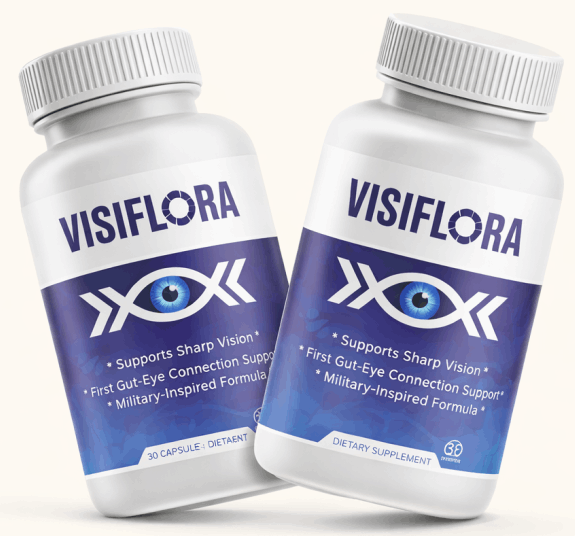
VisiFlora Review 2026: Quick Verdict
VisiFlora is a once-daily vision-support supplement marketed around a “gut-eye connection” concept and a 22-ingredient blend of carotenoids, antioxidants, vitamins, minerals and botanicals. The current presentation highlights ingredients such as astaxanthin, lutein, zeaxanthin, zinc, bilberry extract, grape seed extract, lycopene and saffron, while the broader formula also names vitamin C, vitamin E, copper, selenium, chromium, rutin, quercetin, taurine, alpha-lipoic acid, ginkgo, eyebright, vitamin A, rhodiola and ashwagandha.
The formula is more comprehensive than a simple lutein-and-zeaxanthin product, but more ingredients do not automatically mean better results. Several listed nutrients have real research relevance to eye health, especially carotenoids and antioxidant nutrients, yet the strongest marketing claims about restoring sharp vision, removing floaters or reversing age-related changes go beyond what we can responsibly promise from a dietary supplement.
At the time of our August 2026 check, the current VisiFlora offer listed 2 bottles at $79 per bottle, 3 bottles at $59 per bottle and 6 bottles at $49 per bottle, with free U.S. shipping on the 3- and 6-bottle packages. The seller also advertises a 60-day money-back guarantee. This page treats those figures as time-sensitive and encourages buyers to verify the live checkout before paying.
What Is VisiFlora?
VisiFlora is sold as a dietary supplement for adults interested in supporting visual comfort, retinal and macular nutrition and overall eye wellness. The marketing differentiates the product from conventional eye vitamins by emphasizing the gut-eye connection, internal barriers and nutrient delivery.
The gut and the eye do communicate through immune, metabolic and vascular pathways, and researchers are exploring connections between the intestinal microbiome and ocular health. That makes the “gut-eye” concept scientifically interesting. It does not mean a supplement has demonstrated that intestinal toxins are the primary cause of common vision complaints or that changing the gut will reverse established eye disease.
The practical way to assess VisiFlora is therefore as a multi-nutrient eye-health supplement. It may supply compounds that are relevant to retinal nutrition and oxidative stress, but it is not a replacement for an eye examination, prescription lenses, treatment for retinal disease or evaluation of new visual symptoms.
How VisiFlora Is Supposed to Work

The seller’s explanation combines several pathways. Lutein, zeaxanthin and astaxanthin are positioned around macular pigment, blue-light filtering and antioxidant defense. Vitamins C and E, selenium and plant polyphenols broaden the antioxidant strategy. Zinc, copper and vitamin A relate to normal visual and nutritional physiology. Botanicals such as bilberry, ginkgo, saffron and grape seed are associated with circulation or visual-performance research.
The “gut-eye” portion of the story is less direct. The formula contains compounds marketed around barrier integrity, inflammation and oxidative stress, but the exact claim that a 22-ingredient capsule can neutralize harmful gut-derived LPS in a way that restores visual clarity would require finished-product clinical evidence.
A mechanism can help explain why a formula was built, but it is not a guarantee of outcome. In this review we separate the biological rationale from stronger promises that would need direct testing.
VisiFlora Ingredients Overview
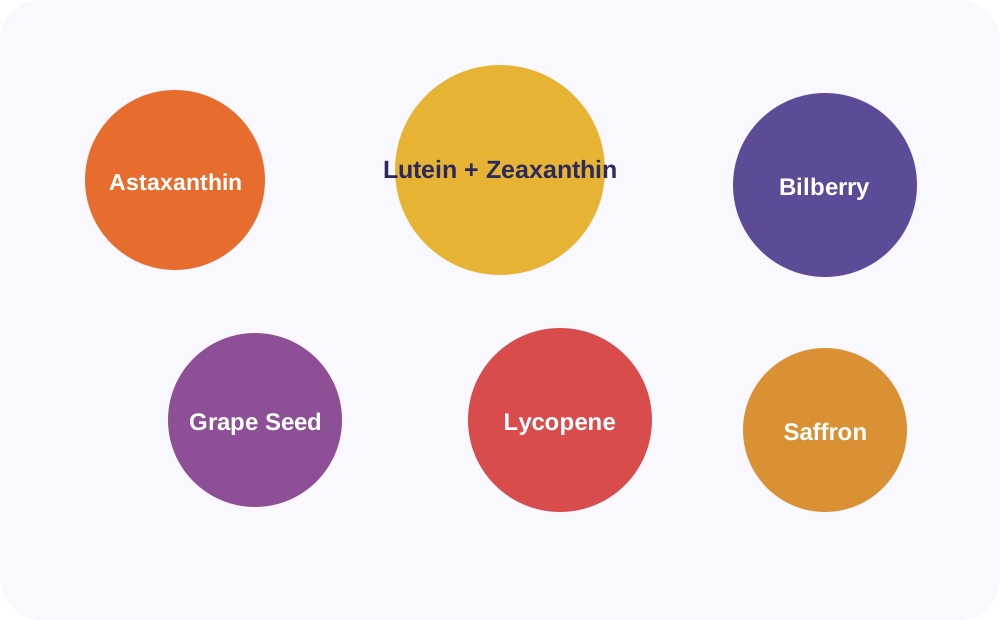
The current seller presentation identifies 22 ingredients across its vision-support concept. They include astaxanthin, copper, selenium, vitamin C, vitamin E, chromium, grape seed extract, rutin, quercetin, taurine, alpha-lipoic acid, ginkgo biloba, eyebright, vitamin A, lutein, zeaxanthin, zinc, bilberry extract, lycopene, saffron extract, rhodiola and ashwagandha.
The current welcome page specifically calls out zinc at 11 mg and describes lutein and zeaxanthin as derived from marigold. Those details are more useful than generic statements because dose and source help readers compare a formula with research.
The presence of 22 ingredients creates both an advantage and a limitation. The advantage is breadth. The limitation is that a complex formula makes it harder to know which component is responsible for any perceived effect and increases the need to check for medication interactions, duplicate nutrients and total daily intake.
Astaxanthin
Astaxanthin is a red-orange carotenoid found in certain algae and marine organisms. It has antioxidant properties and has been studied in eye-fatigue, visual-performance and oxidative-stress contexts.
The VisiFlora sales copy uses very dramatic comparisons for astaxanthin’s antioxidant strength. Such comparisons depend on the laboratory assay and should not be interpreted as a direct measure of clinical eye benefit. An antioxidant being “thousands of times stronger” in one chemical test does not mean vision will improve by a similar factor.
Astaxanthin is nevertheless a reasonable ingredient in a comprehensive eye supplement. Its value should be judged by the actual dose and relevant human evidence rather than headline potency claims.
Lutein and Zeaxanthin
Lutein and zeaxanthin are carotenoids concentrated in the macula, where they contribute to macular pigment and help filter high-energy visible light. They are among the best-established nutritional ingredients in the eye-health supplement category.
Large studies such as AREDS2 investigated lutein and zeaxanthin in people at risk for progression of age-related macular degeneration within a specific multi-nutrient formula. That evidence is meaningful but has a defined population and outcome. It does not prove that everyone taking an eye supplement will gain sharper normal vision.
Their presence strengthens VisiFlora’s nutritional rationale. A buyer should still avoid translating macular-nutrition evidence into promises to cure retinal disease or eliminate the need for ophthalmic care.
Zinc and Copper
Zinc is important to normal visual physiology and is present in the retina and other tissues. Copper is often paired with zinc in eye-health formulations because high supplemental zinc can influence copper status.
The current VisiFlora page lists zinc at 11 mg, which is far lower than the zinc level used in traditional AREDS formulations. That means a person should not assume VisiFlora is equivalent to an AREDS or AREDS2 supplement prescribed or recommended for a particular macular-degeneration risk profile.
The correct choice of an AREDS2-style product is a medical discussion for people with age-related macular degeneration. VisiFlora should be evaluated as a general vision-support supplement unless its label and a clinician indicate otherwise.
Vitamin A
Vitamin A is essential for normal vision, including the visual cycle involved in low-light function. Severe vitamin A deficiency can cause major eye problems, but deficiency patterns vary globally and many adults obtain adequate vitamin A through diet.
More vitamin A is not automatically better. Preformed vitamin A can accumulate at high intakes, and pregnancy creates particular safety considerations. The exact form and amount on the Supplement Facts panel therefore matter.
Marketing that connects vitamin A with night vision can be biologically accurate while still being misleading if it implies that extra vitamin A improves night vision in people who are not deficient. Nutrient sufficiency and treatment are different questions.
Vitamin C, Vitamin E and Selenium
Vitamin C and vitamin E are antioxidant nutrients, while selenium is a trace mineral involved in antioxidant enzyme systems. They are familiar components of many general and eye-health supplements.
Their inclusion supports the formula’s oxidative-stress narrative. The strongest eye-health evidence for antioxidant combinations usually comes from defined formulations tested in specific populations rather than from the idea that antioxidants broadly improve eyesight.
Because vitamin and mineral supplements can overlap, buyers who already take a multivitamin should compare labels. Total intake matters, especially when several products contain the same nutrients.
Bilberry Extract
Bilberry is rich in anthocyanins and has a long history in vision-related supplement marketing. Stories about pilots eating bilberry for night vision are frequently repeated, but historical anecdotes are not a substitute for modern clinical evidence.
Research has explored anthocyanins and bilberry preparations in visual fatigue and retinal-health contexts, with mixed quality and outcomes. Extract standardization and dose matter substantially.
Bilberry is a plausible supporting botanical, but we would not promise that it restores night vision or reverses visual decline based on the ingredient alone.
Grape Seed Extract
Grape seed extract supplies proanthocyanidins and other polyphenols. It is used widely in supplements for antioxidant and vascular support.
Retinal tissues depend on healthy circulation, which explains why a vascular-support ingredient may appear in an eye formula. Yet improving a general circulation marker is not the same as clinically improving visual acuity.
Its inclusion broadens the antioxidant blend, but a buyer should view it as supportive context rather than a primary clinically proven vision ingredient.
Saffron Extract
Saffron has attracted increasing research interest in retinal and visual function. Small clinical studies have evaluated saffron supplementation in age-related macular degeneration and related visual outcomes.
Those studies are interesting and make saffron one of the more compelling botanical components in VisiFlora. However, dose, extract quality and patient population matter, and a multi-ingredient supplement cannot be assumed equivalent to a saffron-only clinical trial.
Saffron research supports curiosity, not a guarantee that VisiFlora will improve a person’s visual acuity.
Lycopene
Lycopene is a red carotenoid found in tomatoes and other foods. It is well known for antioxidant activity and has been studied in cardiovascular and general nutritional contexts.
Eye-health marketing sometimes describes lycopene as helping protect the lens or retina from oxidative stress. That is biologically plausible, but direct clinical evidence for dramatic vision improvement from lycopene supplementation is limited.
In VisiFlora, lycopene is best understood as part of a diversified carotenoid and antioxidant strategy.
Rutin and Quercetin
Rutin and quercetin are flavonoids found in many plants. They are widely researched for antioxidant, vascular and inflammatory biology.
Their inclusion fits the product’s emphasis on capillaries and oxidative stress. However, claims that they directly sharpen eyesight or repair damaged retinal tissue would require more specific evidence.
People taking medications should remember that flavonoids can interact with metabolic pathways depending on dose and formulation. This is another reason to review a 22-ingredient formula as a whole rather than one ingredient at a time.
Alpha-Lipoic Acid and Taurine
Alpha-lipoic acid is an antioxidant cofactor that functions in both water- and lipid-soluble environments. Taurine is an amino sulfonic acid abundant in several tissues, including the retina, and has important biological roles.
Both ingredients have plausible relevance to cellular and retinal physiology. Research on taurine deficiency shows how important the compound is biologically, but that does not mean extra taurine improves vision in every adequately nourished person.
These ingredients add mechanistic depth to the formula while still illustrating the difference between normal physiology and proven supplementation benefit.
Ginkgo Biloba and Eyebright
Ginkgo is commonly marketed for circulation and cognitive support. It has also appeared in small studies related to ocular blood flow and glaucoma, although evidence is not strong enough to make it a substitute for medical treatment.
Eyebright has a long history of traditional use for eye complaints. Traditional use can be a reason for research but does not provide the same level of evidence as controlled clinical trials.
Both botanicals should be framed cautiously. If a person has glaucoma, retinal disease or another diagnosed eye condition, prescribed treatment and professional monitoring take priority.
Rhodiola and Ashwagandha
Rhodiola and ashwagandha are commonly marketed as adaptogens for stress and fatigue. Their relationship to vision is indirect.
Eye strain can feel worse during fatigue, prolonged screen use or poor sleep, so stress-support ingredients may contribute to overall comfort. That does not mean they repair optical or retinal problems.
These botanicals can also interact with medications or medical conditions, making safety review more important in a complex formula.
What Does the Evidence Really Support?
VisiFlora contains several ingredients with stronger eye-health relevance than the average general supplement. Lutein and zeaxanthin have substantial research around macular nutrition, and saffron, astaxanthin and selected antioxidants have meaningful human research interest.
The difficulty is product-level translation. We did not identify large independent clinical trials showing that the exact 22-ingredient VisiFlora formula produces all of the outcomes promoted in the sales funnel. Claims involving restored sharp vision, disappearance of floaters or reversal of age-related visual decline therefore deserve caution.
The formula can be research-informed without being clinically proven as a finished product. That distinction is central to our assessment.
The Gut-Eye Connection: Interesting but Easy to Overstate
Researchers are increasingly studying links between gut microbiota, systemic inflammation, immune signaling and ocular disease. This area is scientifically interesting and may eventually produce useful preventive or therapeutic strategies.
A commercial supplement can overstate this research by presenting gut-derived toxins as a single hidden cause of vision decline. Eye health is influenced by genetics, age, vascular health, diabetes, smoking, UV exposure, nutrition, ocular pressure and many other factors.
The gut-eye concept makes VisiFlora distinctive, but buyers should not let a novel mechanism replace established risk factors or eye examinations.
Can VisiFlora Improve Floaters?
Eye floaters are usually caused by changes in the vitreous gel inside the eye. Many are benign and become more common with age, but sudden new floaters, flashes or a curtain-like shadow can signal a retinal tear or detachment and require urgent examination.
We would not rely on a dietary supplement to eliminate floaters. Testimonials describing reduced floaters cannot establish that the product treats the underlying vitreous changes.
Any advertisement using floaters as a pain point should also explain the red-flag symptoms that require prompt eye care. Safety is more important than conversion.
Can VisiFlora Improve Night Vision?
Night vision depends on retinal function, optical quality, pupil responses, vitamin A status and many other factors. Lutein, zeaxanthin, zinc and vitamin A are relevant to eye physiology, but extra supplementation does not guarantee better night driving.
Difficulty seeing at night can be associated with refractive error, cataracts, retinal disorders, vitamin deficiencies or other conditions. It deserves assessment when it is new or progressive.
A supplement can provide nutritional support, but it should not be used to avoid an eye examination if night vision is deteriorating.
VisiFlora and Digital Eye Strain
Digital eye strain often involves dryness, focusing fatigue, reduced blinking, glare and prolonged near work. Supplements are not the primary management tool for these mechanical and behavioral contributors.
Practical measures can include regular breaks, appropriate screen distance, updated vision correction, managing dry eye and adjusting the visual environment. Persistent symptoms deserve professional evaluation.
Antioxidant and carotenoid nutrition may support general eye health, but it should not be marketed as a replacement for basic screen-use habits and appropriate eye care.
VisiFlora Pros and Cons
Potential advantages include a broad formula, several ingredients with genuine eye-health research relevance, once-daily dosing, a product-specific visual-health focus, transparent current package pricing and a 60-day guarantee.
Limitations include the complexity of a 22-ingredient blend, uncertainty about finished-product clinical evidence, potential medication interactions, a significant upfront cost for larger packages and strong marketing claims that may exceed what the available evidence supports.
The product is most attractive to buyers who specifically want a comprehensive eye-health formula and understand that more ingredients do not guarantee more benefit.
How to Take VisiFlora
The current seller FAQ states that VisiFlora is taken as one capsule daily with food. Follow the bottle you receive because serving directions can change.
Taking the capsule with food may also be sensible for fat-soluble carotenoids, although the exact formulation determines absorption. Do not exceed the labeled serving in an attempt to accelerate results.
Store the product according to the current label and keep it in a cool, dry place away from excessive heat unless the manufacturer provides different instructions.
Side Effects and Safety Considerations
A 22-ingredient formula creates multiple safety considerations. Ginkgo, ashwagandha, rhodiola, saffron and other botanicals may interact with medications or be unsuitable for certain conditions. Vitamin A has special relevance to pregnancy and total intake.
Minerals such as zinc, copper, selenium and chromium also contribute to total daily exposure. People using a multivitamin or other targeted supplements should compare labels for duplication.
Pregnant or nursing individuals, people using prescription medication and those with significant medical conditions should discuss the formula with an appropriate healthcare professional before use.
When Vision Symptoms Need Urgent Eye Care
Sudden loss of vision, a new shower of floaters, flashing lights, a dark curtain or shadow, severe eye pain, eye trauma or sudden double vision are not supplement-shopping problems. They can require urgent evaluation.
Gradual changes also deserve routine eye examinations, particularly in people with diabetes, glaucoma risk, age-related macular degeneration risk or strong family history.
A supplement can be part of a wellness routine only after appropriate diagnosis and management take priority.
VisiFlora Pricing and Packages
At our August 2026 check, the VisiFlora sales page displayed a starter package of 2 bottles for $158 total, or $79 per bottle. The 3-bottle package was $177 total, or $59 per bottle, and the 6-bottle package was $294 total, or $49 per bottle.
The seller currently advertises free U.S. shipping on the 3- and 6-bottle packages. All three offers also display three digital bonus guides.
These figures can change. Always verify the live checkout. A six-bottle purchase has the lowest advertised unit price, but it also requires the largest upfront commitment.
60-Day Money-Back Guarantee
The current VisiFlora sales page advertises a 60-day money-back guarantee. If a buyer is dissatisfied, the seller states that bottles can be returned under the current refund process.
Save the order confirmation, transaction details and live guarantee terms when purchasing. Do not wait until the final day to initiate a refund request.
Supplements Review is not the seller and cannot process refunds. The seller and payment platform control the guarantee procedure.
Where to Buy VisiFlora
The purchase links on this review use the ClickBank affiliate URL supplied to Supplements Review. If a qualifying purchase is made through one of these links, we may earn a commission.
The current seller page says VisiFlora is sold online and is not offered through common third-party marketplaces. Because similarly named websites exist, verify the product and checkout carefully.
Our commercial links are marked sponsored and nofollow. The affiliate relationship does not alter our evidence standard.
VisiFlora Complaints and Buyer Concerns
We do not use seller testimonials or before-and-after images. The VisiFlora affiliate terms themselves state that affiliates are not permitted to use VisiFlora before-and-after photos or user testimonials in promotions, so this review avoids them entirely.
The main buyer concerns are more practical. Marketing around floaters, night vision and toxin removal can create expectations that are stronger than finished-product evidence. The 22-ingredient formula also makes interactions and dose comparison more complicated.
Finally, package discounts encourage large first orders. Those concerns do not prove the product is fraudulent, but they deserve attention before purchasing.
Is VisiFlora Legit or a Scam?
VisiFlora is a real commercial vision-support supplement with an active seller page, current package pricing, an affiliate program, a refund policy and a defined ingredient story.
That does not mean every promotional claim has been clinically demonstrated. The product has several scientifically relevant ingredients, while the strongest outcome claims remain less certain.
Our conclusion is that VisiFlora is a legitimate supplement offer that should be evaluated as optional nutritional support—not as a proven treatment for retinal disease, floaters, cataracts or other diagnosed eye conditions.
VisiFlora vs Standard Eye Vitamins
Traditional eye vitamins may use a smaller set of nutrients, while VisiFlora combines carotenoids, antioxidants, minerals and botanicals into a broad 22-ingredient formula. Complexity is the most obvious difference.
If a clinician has recommended an AREDS2 formulation for age-related macular degeneration, do not substitute a general vision supplement simply because it contains lutein and zeaxanthin. The dose and complete formula matter.
VisiFlora is better compared with general comprehensive eye-health supplements than with prescription or disease-specific recommendations.
Who Might Consider VisiFlora?
VisiFlora may appeal to an adult who wants a comprehensive vision-support supplement, prefers once-daily dosing and is interested in carotenoids plus a wider botanical blend.
It is less suitable for someone trying to self-treat sudden visual symptoms, retinal disease or a progressive decline in vision without an examination. It may also be a poor fit for people taking multiple medications unless the formula has been reviewed for interactions.
The product should fit around regular eye care, not replace it.
How We Would Evaluate a Personal Trial
Define a realistic goal before starting. Convenience, tolerance and subjective visual comfort can be observed. Claims involving visual acuity, retinal health or disease progression require objective testing.
Keep screen habits, glasses or contact-lens use and other supplements relatively stable if you want to judge subjective effects. Otherwise, multiple changes make attribution impossible.
If you are interested in objective vision change, use a professional eye examination rather than relying on sales-page testimonials or informal online vision tests.
Our Final VisiFlora Verdict
VisiFlora has one of the more comprehensive ingredient lists in the vision-supplement category. Lutein, zeaxanthin, zinc, saffron, astaxanthin and several antioxidant nutrients provide a reasonable eye-health foundation, while the broader botanical blend makes the formula distinctive.
The main weakness is the gap between ingredient plausibility and the strongest finished-product claims. We would not tell readers that VisiFlora is proven to eliminate floaters, restore damaged eyesight or reverse age-related eye disease.
Our verdict is “interesting formula, realistic expectations required.” For an adult who wants a broad vision-support supplement and can safely use the ingredients, VisiFlora may be worth considering. Professional eye care should remain the priority for symptoms, disease and measurable vision changes.
Frequently Asked Questions
What is VisiFlora? It is a once-daily vision-support dietary supplement. How many ingredients does it contain? The current seller presentation describes a 22-ingredient formula.
What key ingredients are highlighted? Astaxanthin, lutein, zeaxanthin, zinc, bilberry, grape seed, lycopene and saffron are among the most prominently featured ingredients. How do you take it? The current FAQ says one capsule daily with food.
Does VisiFlora contain lutein and zeaxanthin? Yes. Does it contain zinc? The current page lists zinc at 11 mg. Is VisiFlora an AREDS2 supplement? Do not assume it is equivalent to a clinical AREDS2 formula; the complete doses and formulation differ.
Can VisiFlora cure macular degeneration? No supplement review should make that claim. Can it remove floaters? We found no finished-product evidence strong enough to promise that outcome. What should I do if I suddenly see many new floaters or flashes? Seek urgent eye evaluation.
Can VisiFlora help digital eye strain? It may provide nutritional support, but breaks, blinking, appropriate correction and dry-eye management are more direct approaches to common digital strain. Does VisiFlora have a guarantee? The current seller advertises 60 days.
How much does it cost? At our August 2026 check: 2 bottles $158 total, 3 bottles $177 total, 6 bottles $294 total. Is shipping free? The seller currently advertises free U.S. shipping on the 3- and 6-bottle packages.
Where do our buy buttons go? They use the ClickBank affiliate link supplied for this site. Does Supplements Review sell the product? No. We are an informational affiliate publisher.
Is VisiFlora safe for everyone? No. A complex formula can create interaction and duplication issues. Should pregnant users take it? Pregnancy is a reason to review the complete formula with a clinician, especially because vitamin A form and amount matter.
Is VisiFlora a scam? It is a real commercial supplement, but real product status does not prove all marketing claims. Does more than one capsule work faster? Follow the current label and do not exceed the serving without professional advice.
What is our bottom line? VisiFlora is a broad eye-health formula with several credible nutritional ingredients, but it should support—not replace—professional eye care and realistic expectations.